Causal Inference in Longitudinal Data under Unknown Interference

Working paper, with Michael Jetsupphasuk; an earlier version of the paper is entitled "Causal Inference under Temporal and Spatial Interference."
Download the manuscript here
Why this paper matters
Longitudinal causal inference in biostatistics, epidemiology, and social sciences often relies on marginal structural models (MSMs), which summarize the effects of time-varying treatments and can be consistently estimated using inverse probability weighting (IPW) under sequential exchangeability. However, this classical framework assumes no interference across units—an assumption frequently violated in settings involving social interactions, environmental exposures, or shared community environments.
This paper shows that the logic behind MSMs extends far beyond the no-interference world. We demonstrate that estimates from the IPW-based approach retain meaningful causal interpretations even when the relationship between a unit's outcome and others' treatments is unknown and heterogeneous. Building on this insight, we introduce a modified version of MSMs that allows researchers to study how the spillover effects generated by different treatment histories vary with proximity across units, enabling a principled analysis of both direct and spillover effects in longitudinal settings.
What our approach contributes
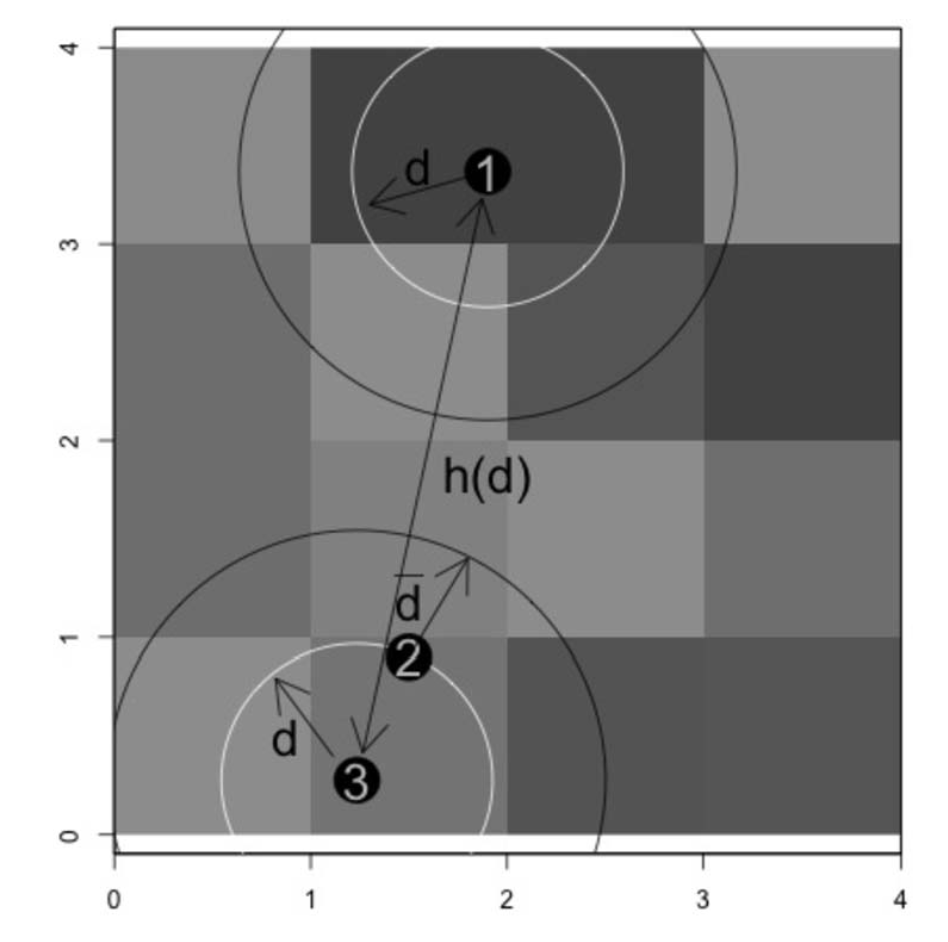
We first introduce the estimand Average Marginalized Response (AMR), defined as the average—across all units in the sample—of the expected outcomes of their neighbors at a proximity level d ≥ 0, under a fixed treatment history for the reference unit. Because the AMR depends only on that unit's treatment history, it can be represented in the form of a MSM. Under a mild generalization of sequential exchangeability, we show that AMRs and the parameters of the corresponding MSM are identifiable and can be consistently estimated using weighted least squares (WLS). In particular, the familiar IPW estimator can be interpreted as estimating the AMR at proximity level d=0.
We show the asymptotic normality of the WLS estimator using recently developed central limit theorems for dependent data and establish valid large-sample inference through HAC variance estimators that remain robust under complex dependence. We then illustrate the practical value of the AMR framework through simulations and two empirical applications. In the first application, we study how exposure to wind turbines shapes political preferences in Canada (Stokes, 2016); in the second, we examine the effects of second-hand smoke on body weight and the incidence of cardiovascular diseases using data from the Framingham Heart Study. Across both settings, the AMR approach uncovers meaningful patterns of spillover while avoiding the misspecification risks that challenge conventional methods, demonstrating its flexibility and reliability for analyzing longitudinal causal effects under unknown interference structures.

Figure 1: Replication results of Stokes (2016)


Comments